
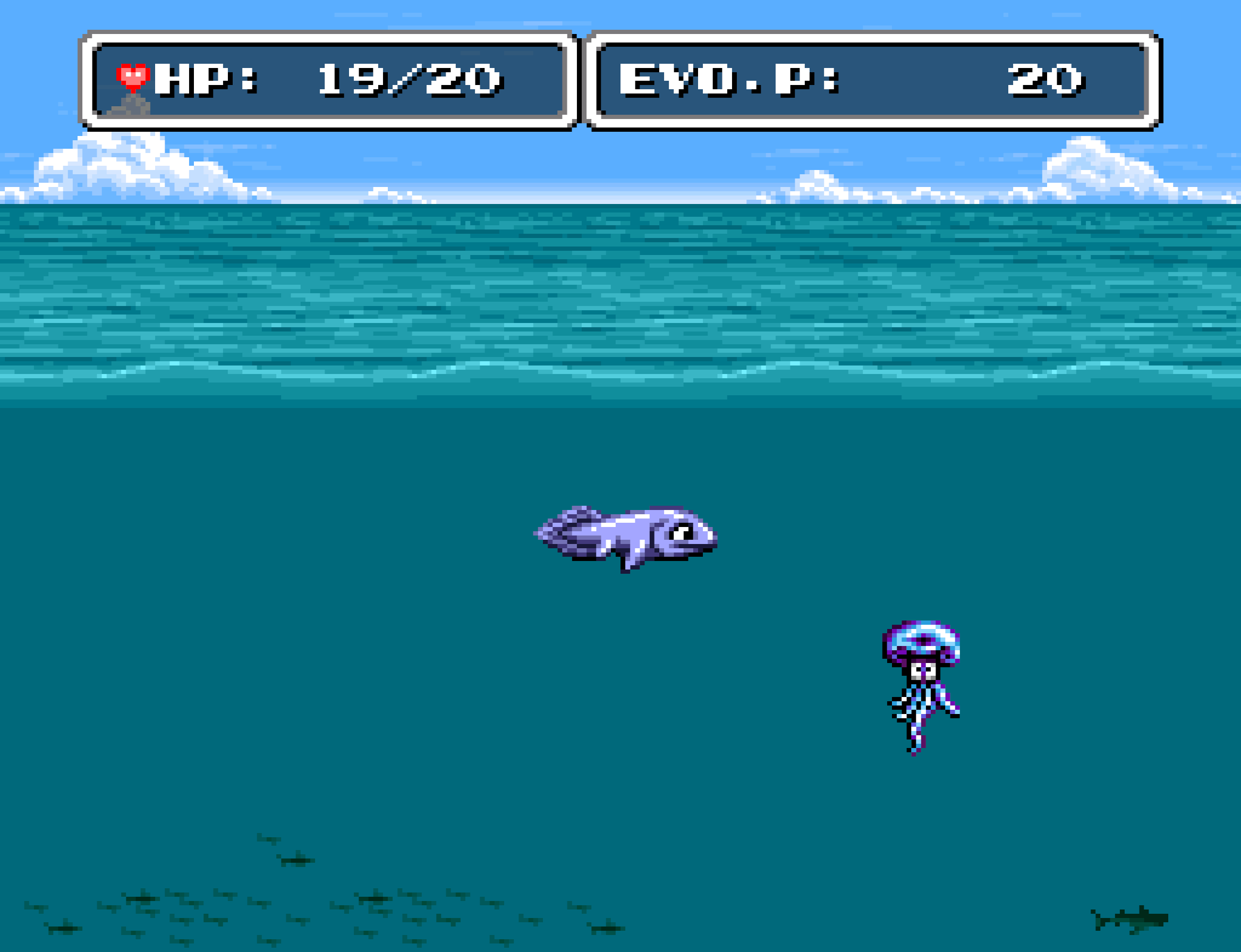
When I wrote about Terranigma I said being a PAL gamer in the 90s was mostly an exercise in losing gracefully, and that we got to feel slightly smug exactly once. This is the losing gracefully part. E.V.O.: Search for Eden is the Enix game that went the other way — Japan got it, America got it, and the PAL world got nothing. Not late, not cut down, nothing. I didn’t know it existed until years afterwards.
So what is it?
You. Start. As. A. Fish. A small one, with a bite attack. Gaia, daughter of the sun, sets the terms: survive 4.6 billion years of natural selection and you can enter Eden. That’s the game.
E.V.O. is a 1992 action-RPG developed by Almanic and published by Enix, released in Japan on 21 December 1992 as 46億年物語 はるかなるエデンへ — 4.6 Billion Year Story: To Distant Eden — and in North America in July 1993. You side-scroll through five eras, ocean to land to dinosaurs to ice age to early man, eating what you kill. Eating is the economy. Meat pays out EVO points and you spend them not on a level counter but on your actual body, part by part — bigger jaws, proper legs, a horn if you think a horn is the answer. Whatever is swimming around by the end of the first hour is nobody’s fault but yours.
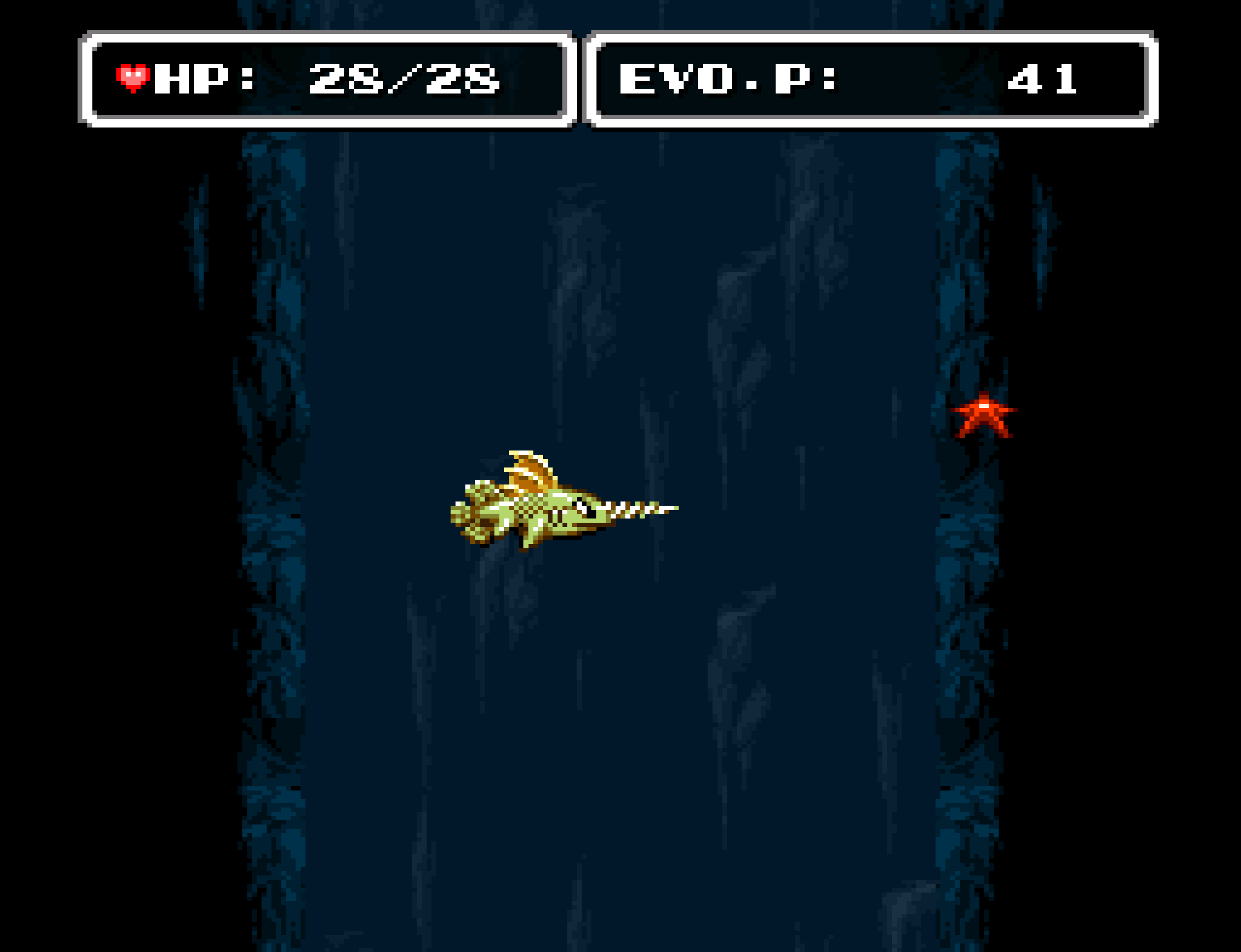
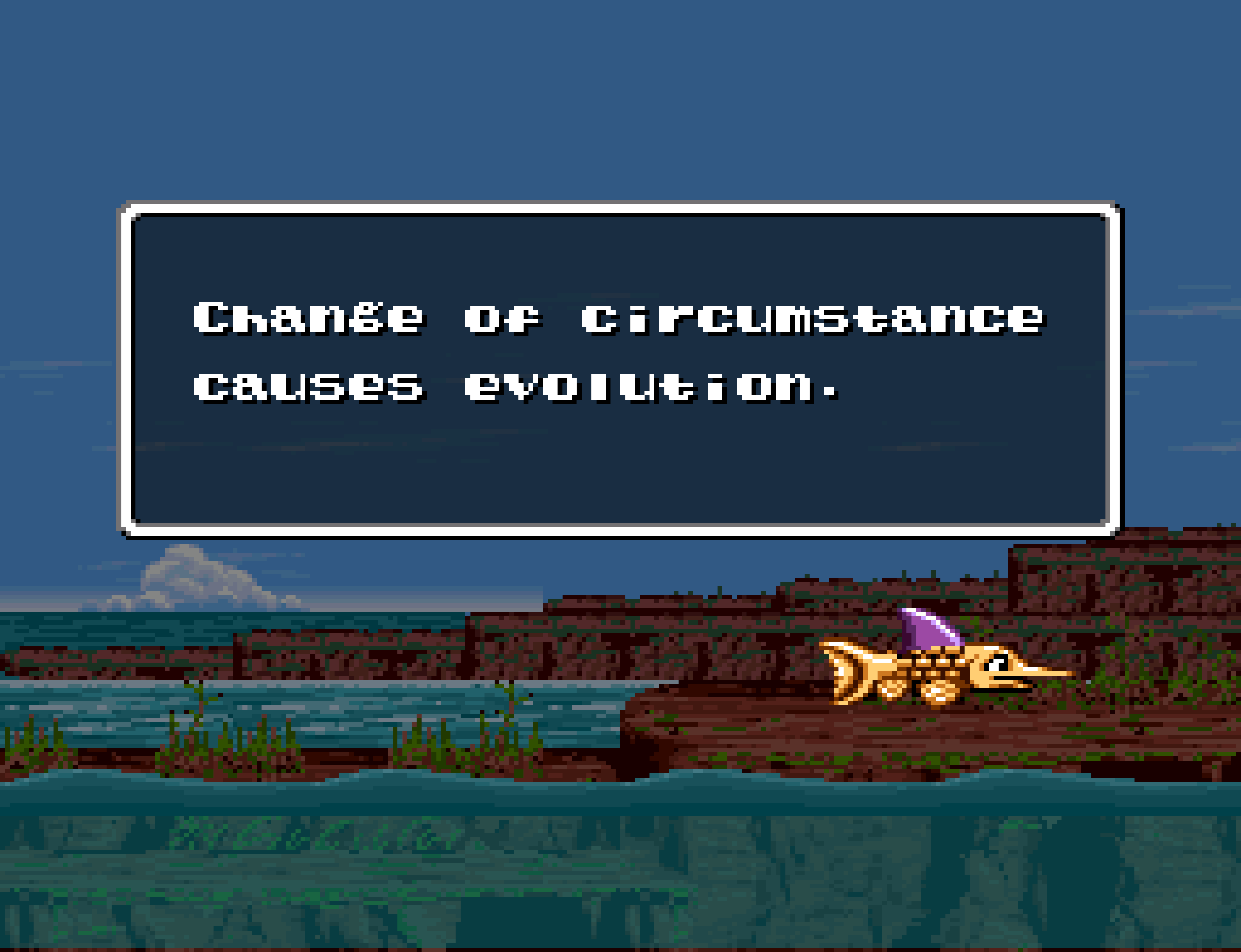
It gets stranger. Hidden evolution branches let you jump lines entirely — the right choices turn your amphibian into a bird, or a mammal, and eventually a person. A battery-backed “Book of Life” stores up to fifty of your creatures, an actual museum of your own dumb decisions. There’s no game over, Gaia just revives you and docks the points. And running under all of it is a plot about mysterious crystals and hidden Martian colonists interfering with Earth’s evolution experiment. The game presents this with a straight face.
And it’s hard. Weirdly, genuinely hard. That no game over sounds like mercy until you play it — enemies out-level you the second you get comfortable, and whole eras turn into grinds where you eat everything on screen just to afford surviving the next one. I died more to this cute fish game than to plenty of things built to kill you. The revive isn’t kindness, it’s the game knowing you’ll need the reps.
Why did PAL peeps miss out?
Hard to say. Terranigma at least has a tidy corporate tragedy — Enix America closed, the localisation got orphaned. E.V.O. has just an absence. Enix’s American branch was open and trading in 1993, put the game on US shelves, and no PAL publisher ever touched it. Super Play covered it in the UK as an import and that was the entire official PAL story. Cartridge costs? RPGs being a hard sell over here? I have no idea, and I haven’t read anything that sheds light.
What makes it sting is everything since. No Virtual Console, no mini console, no Switch Online, no remaster — it has never been re-released, anywhere, in any form. IGN later called it one of the most brilliantly original game designs ever conceived. The design everyone agrees nobody else has dared repeat is locked on a 1992 cartridge, still.
Five eras, one very confused animal
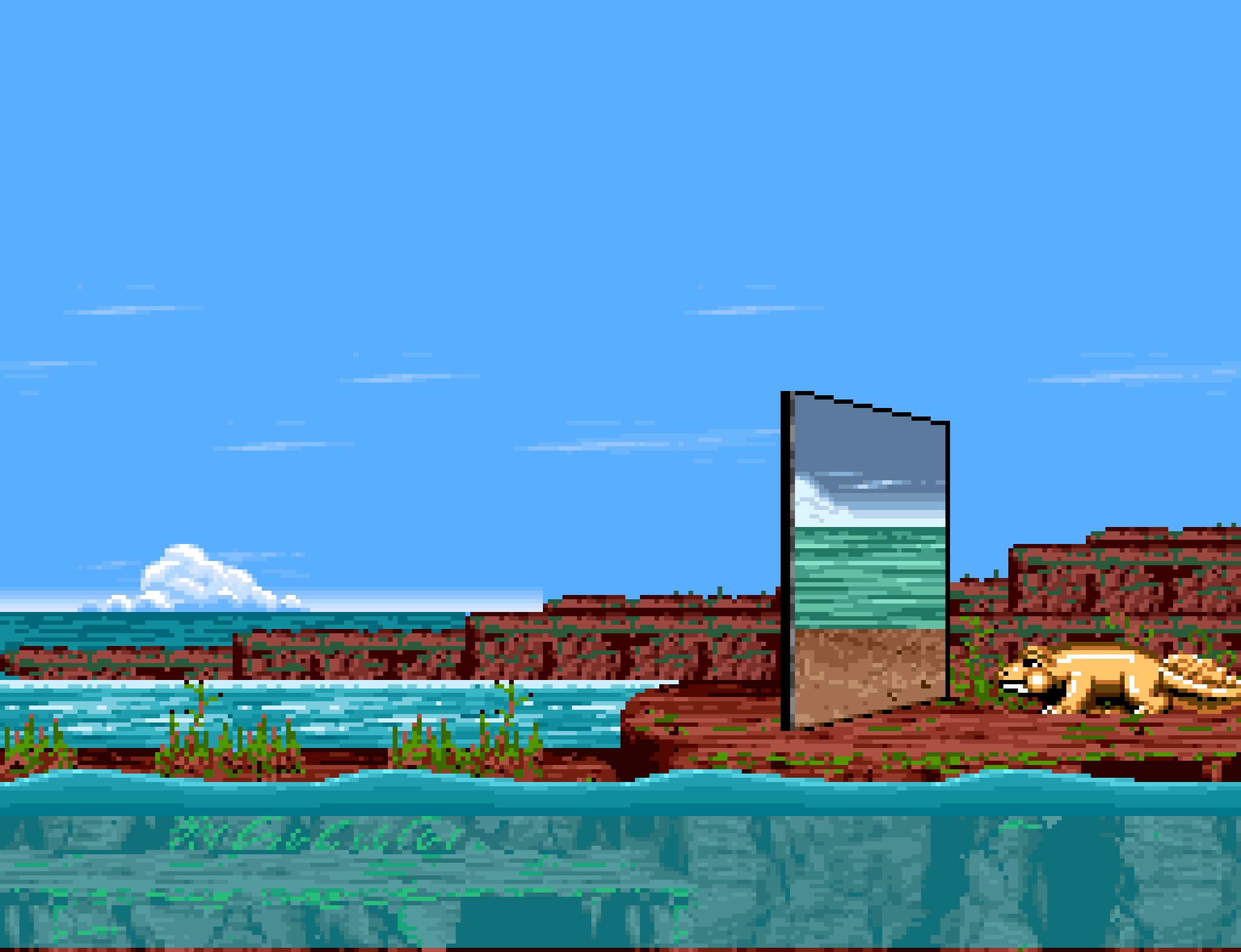
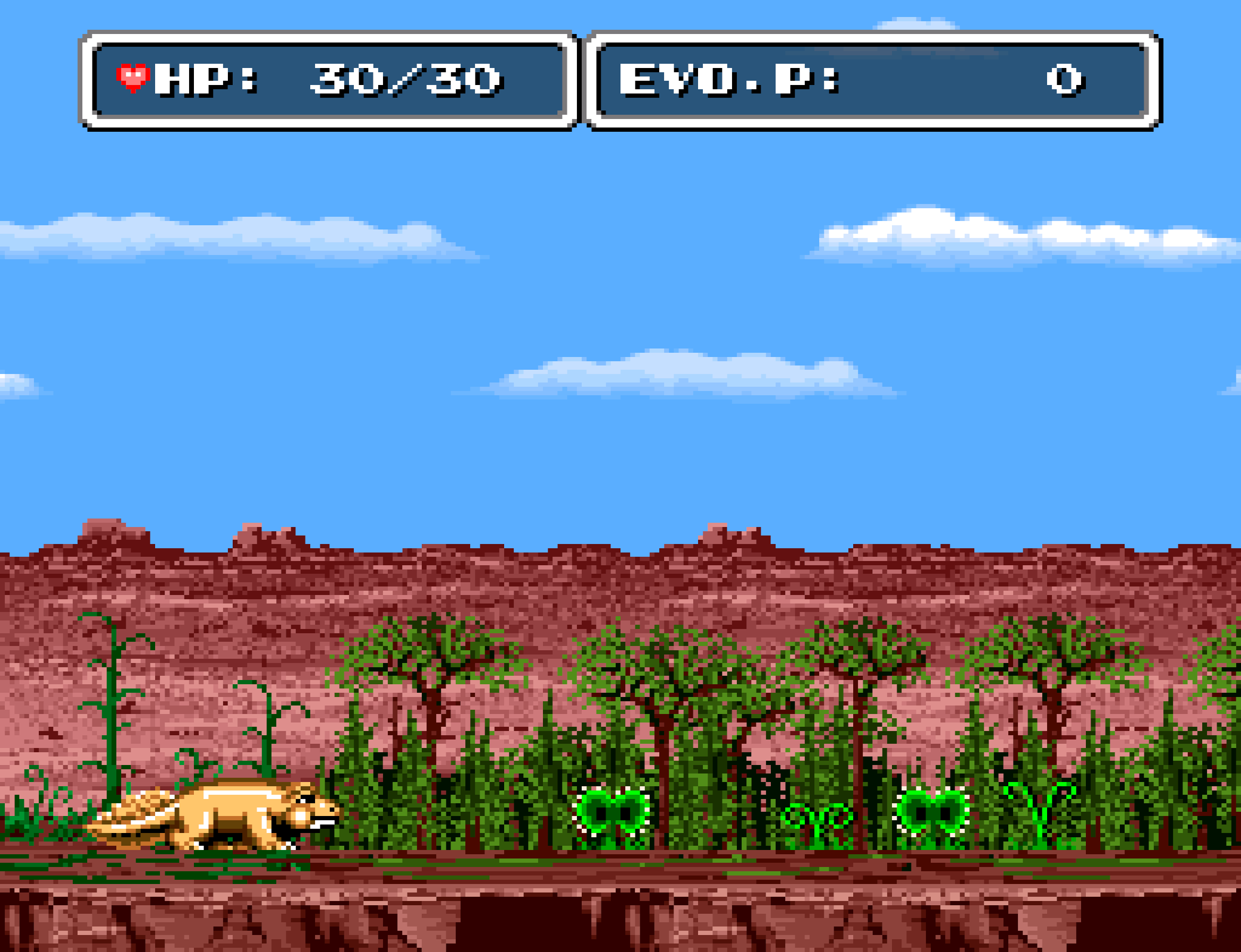
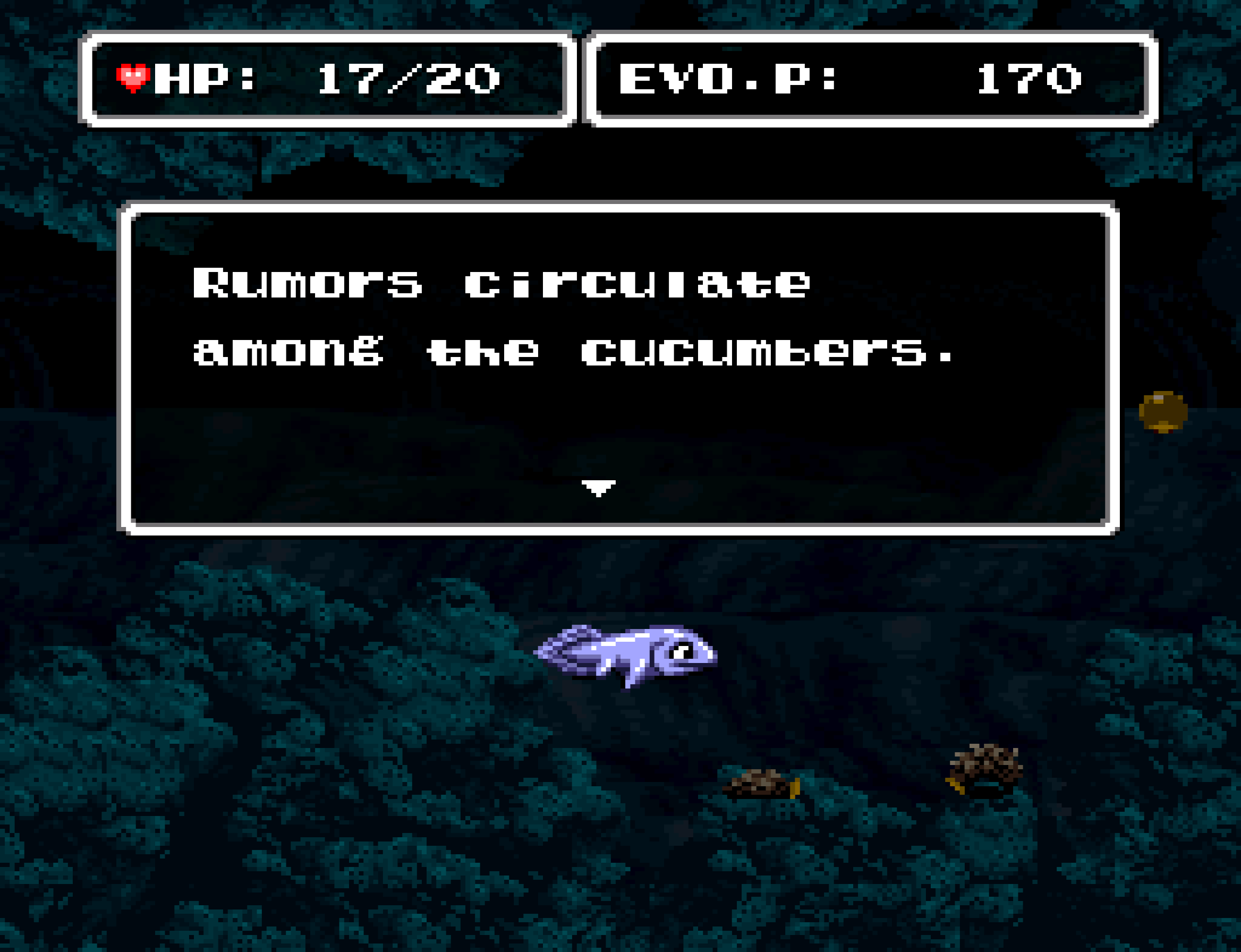
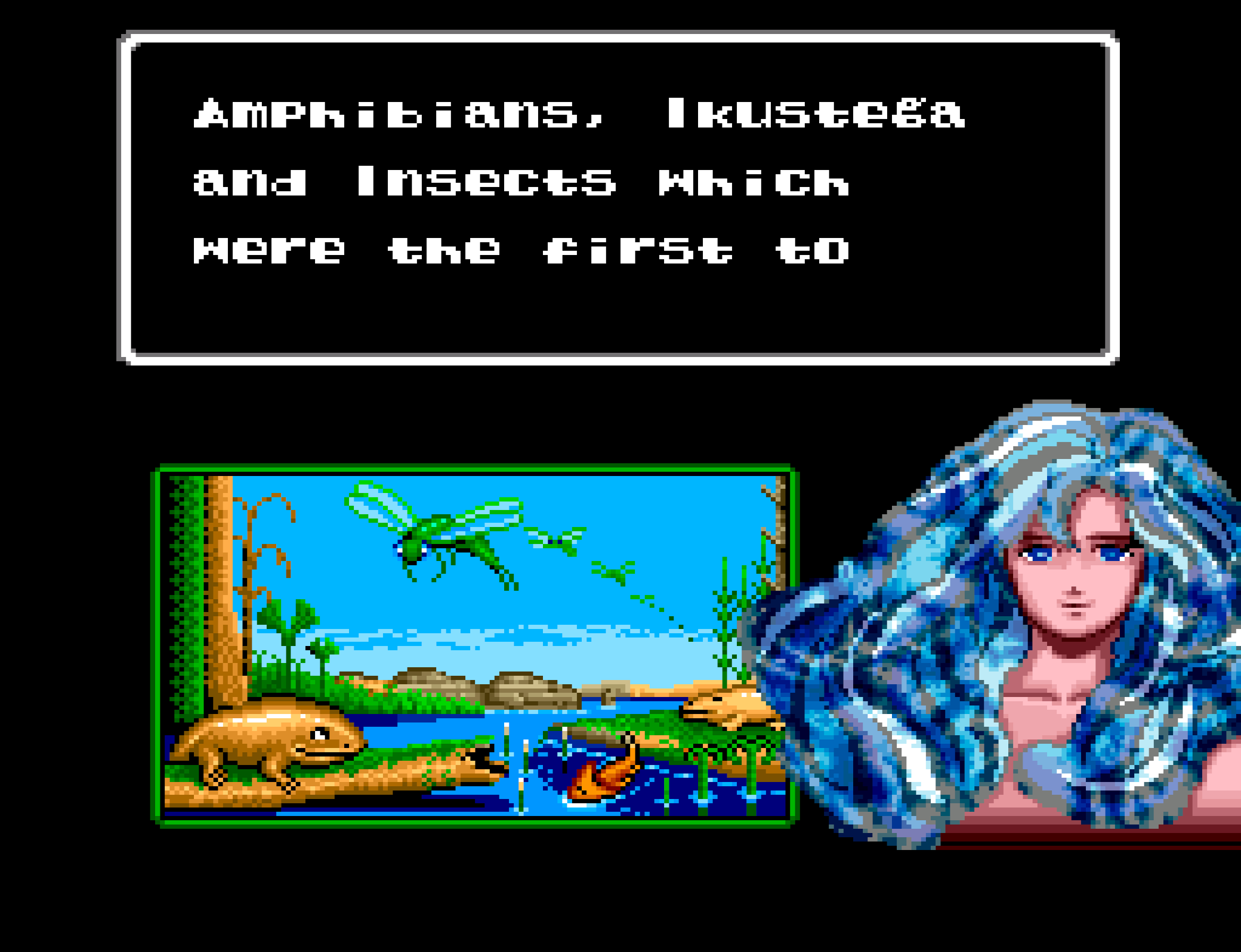
The Dragon Quest connection
The music is the quiet flex. Koichi Sugiyama — the Dragon Quest composer — scored the PC-98 original, and Motoaki Takenouchi arranged it for the SNES. Two pieces were performed by the Tokyo City Philharmonic at the Game Music Concert in 1992, proper tails-and-podium stuff. Hardcore Gaming 101, meanwhile, describes most of what you hear in-game as a thirty-second two-chord blues loop. Both of these things are true and I find that very funny.
And there’s a deeper cut underneath. The 1990 PC-98 original, 46 Okunen Monogatari: The Shinkaron, is a different game — turn-based, Dragon Quest bones, a much bigger story with a different tale for each era, carrying on past humanity into the future. Japan-only, PC-only, untranslated for 26 years. Then in 2016 a fan group patched it into English. The group’s name is 46 OkuMen. They named themselves after the game. That’s the level of devotion this series inspires in the eleven people who played it.
How to play it in 2026
- The original US cartridge. Authentic carts are asking around NZ$700–900 loose on eBay right now, and a boxed copy runs past NZ$1,300 — asking prices, mind, which always flatter the seller. Steer clear of the NZ$40 “brand new” listings, those are reproductions. And there’s no PAL cart to fall back on, so you’re importing NTSC either way: a US console, or an adapter on top. The price only goes one way while there’s no re-release.
- Emulation. The US release has an official English script, so no patch needed. Any SNES emulator handles it. Sourcing the game is on you.
- The PC-98 original. The 46 OkuMen patch is at their site, and this is the version with the big story. Fair warning that PC-98 emulation is its own weekend project.
- Officially, on a modern platform? Nothing. Nowhere. Square Enix owns the catalogue now, and if they ever remember this one, every region finally gets it at the same time. There’s something fair about that, I guess. Thirty-three years late, all of us together.
Further reading
- E.V.O.: Search for Eden — Hardcore Gaming 101, the deep dive on both games
- E.V.O.: The Theory of Evolution — 46 OkuMen, the PC-98 fan translation project
- Re-release this: E.V.O.: Search for Eden — Retro XP on the missing re-release