
Here’s a thing that should be better known. A year and a half before Pokémon taught everyone that the proper way to fight is to stand at the back and send something else in to do it, a Super Famicom game had you doing exactly that. The difference is you didn’t catch your fighters. You built them. Out of scrap.
Robotrek came out in Japan in July 1994, in America that October, and in Europe, Australia and New Zealand never. I found it years later the way you find most of these, someone mentions it in passing and you have to stop and go back — that existed?
So what is it?
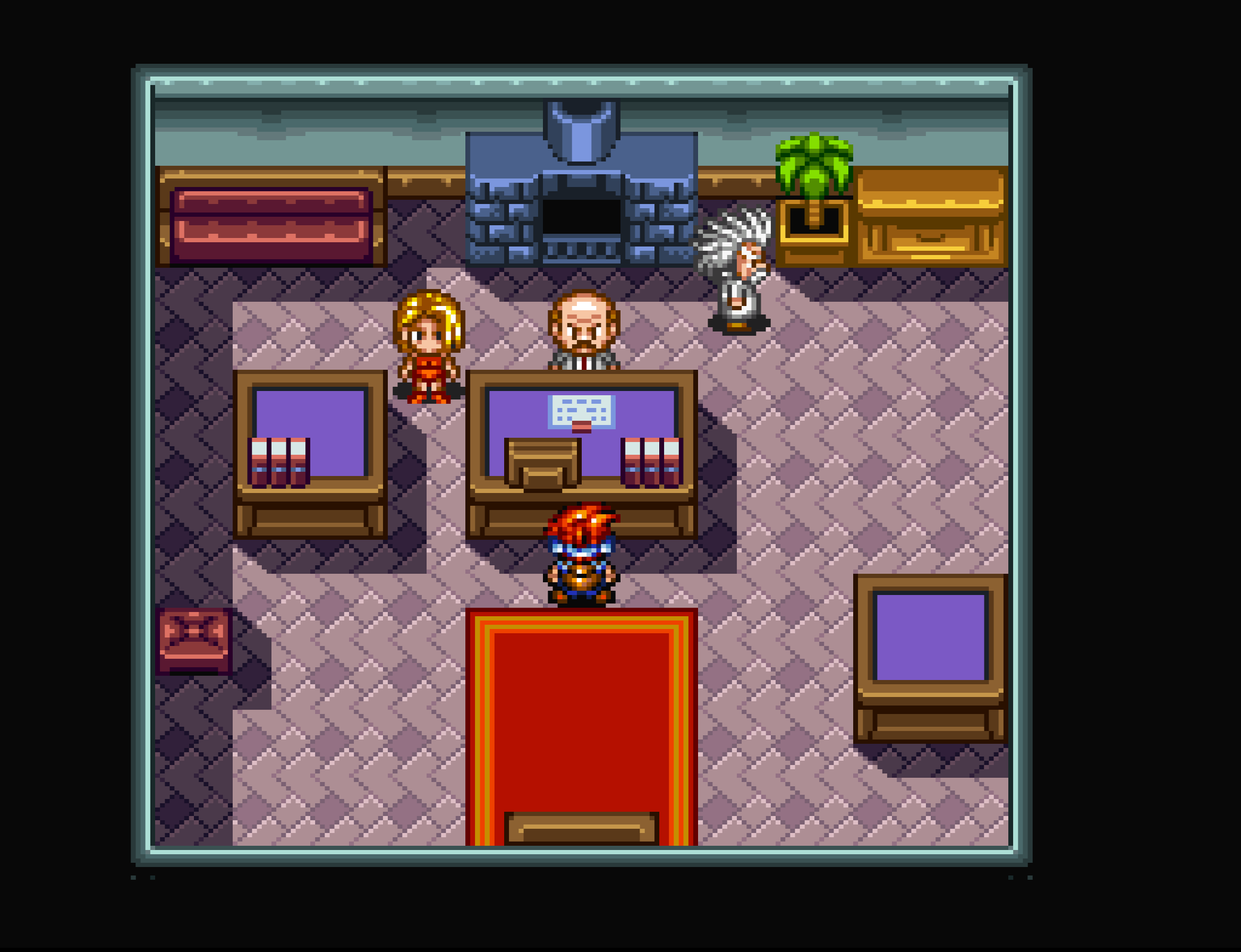
Robotrek — スラップスティック, Slapstick, in Japan — is a 1994 RPG made by Quintet and published by Enix. You play a kid whose dad is an inventor, in a town called Rococo, and there’s an evil outfit called the Hackers who need dealing with. Standard save-the-world stuff, told with a completely straight comedic face. The Japanese title is the honest one.
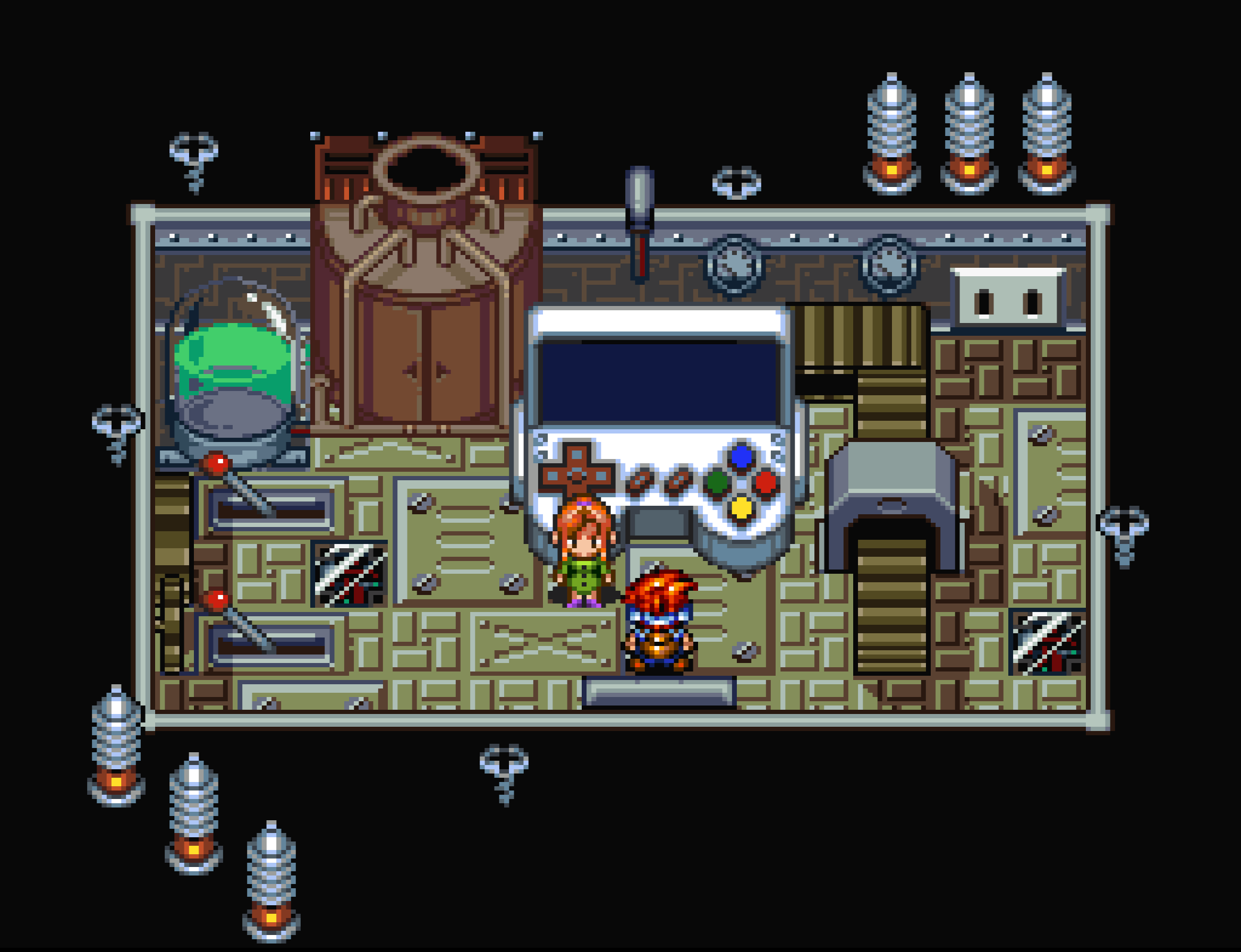
The hook is that the kid never throws a punch. You build robots, up to three of them, kit them out with weapons and armour you’ve made yourself, and send them into battle in your place. This is literally my childhood dream. The whole game is the workshop. Combat is just where you find out whether your build was any good.
Why nobody remembers it
Bad timing, mostly. Robotrek landed in the same stretch as Final Fantasy VI, in a market where a JRPG in the West lived or died on a magazine review and a bit of word of mouth, and a comedy game about building robots was never going to shout down Kefka. By Quintet’s own count it sold around 45,000 copies in Japan and 20,000 in North America. Those are not numbers that get you a sequel. A former Enix America producer, Robert Jerauld, later put the flop down to no advertising and a Super Nintendo already drowning in games.
It didn’t help that Enix aimed it younger than its stablemates and then let the US box art do the opposite — an ominous Death-Star-looking space station, all doom, on the front of a game whose actual tone is a talking crab. And of course the PAL world got nothing, same as ever. There’s even a small tease in the ROM that Europe was on someone’s mind — the smaller font keeps a set of spare tiles set aside for European accented characters, left blank, unchanged from the Japanese version — but that’s as far as it got.
Why it’s actually worth caring about
The building. It’s not a menu you poke once an hour, it’s the point of the whole thing.
Your robots don’t level up on their own. You get Program Points and you spend them by hand, deciding what each robot actually is — a glass cannon, a tank, whatever you can afford. Weapons and gear come out of an R&D machine that combines items you’ve scavenged, with recipes unlocked by reading manuals the game calls Inventor’s Friends. Even the special attacks are programmed, macro-style, a little sequence you set up yourself. And it all shows on the robot — swap a weapon and you see it, tiers and all. For 1994 that’s a lot of tinkering, and the good kind, where the fun is in the fiddling rather than the grind.
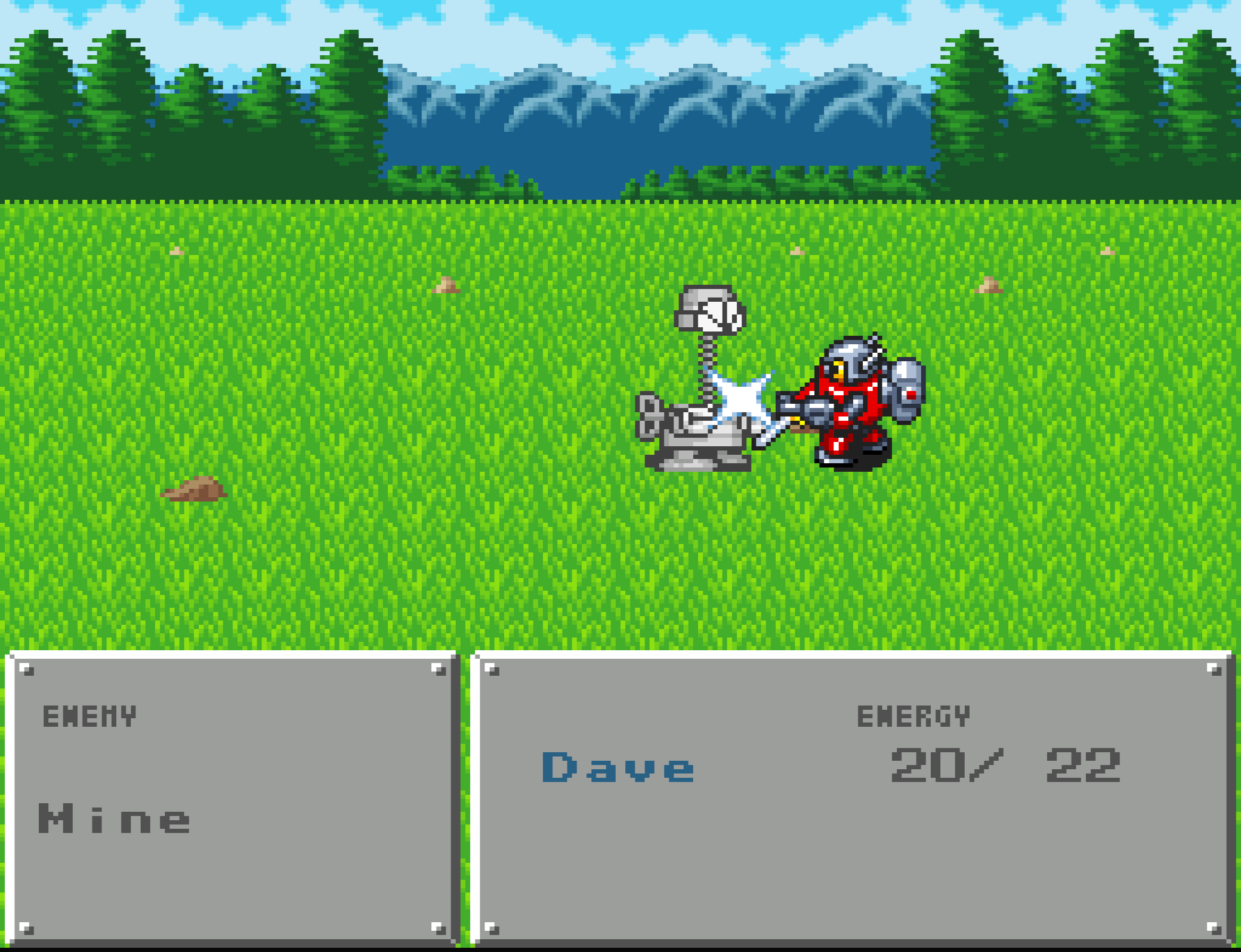
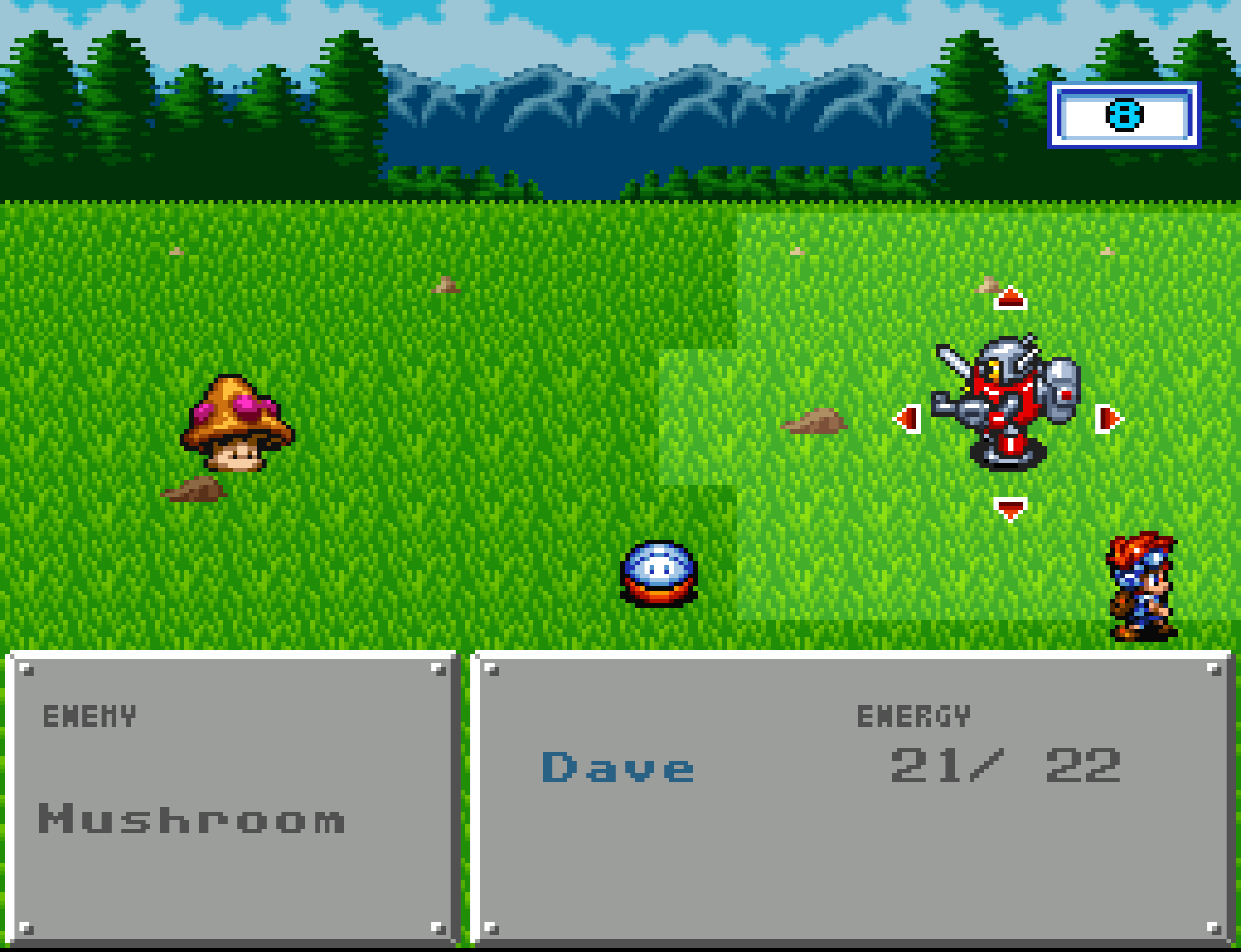
Battles run on three lanes and a stamina economy that’s half turn-based, half real-time — heavier attacks cost more energy, and while your gauge recharges the enemy gets to act, so a big hit you can’t afford yet is a real decision. Encounters are visible on the map and you can dodge the ones you’re not ready for, there’s a bonus for finishing a fight quickly, small quality-of-life things that plenty of its contemporaries never bothered with.
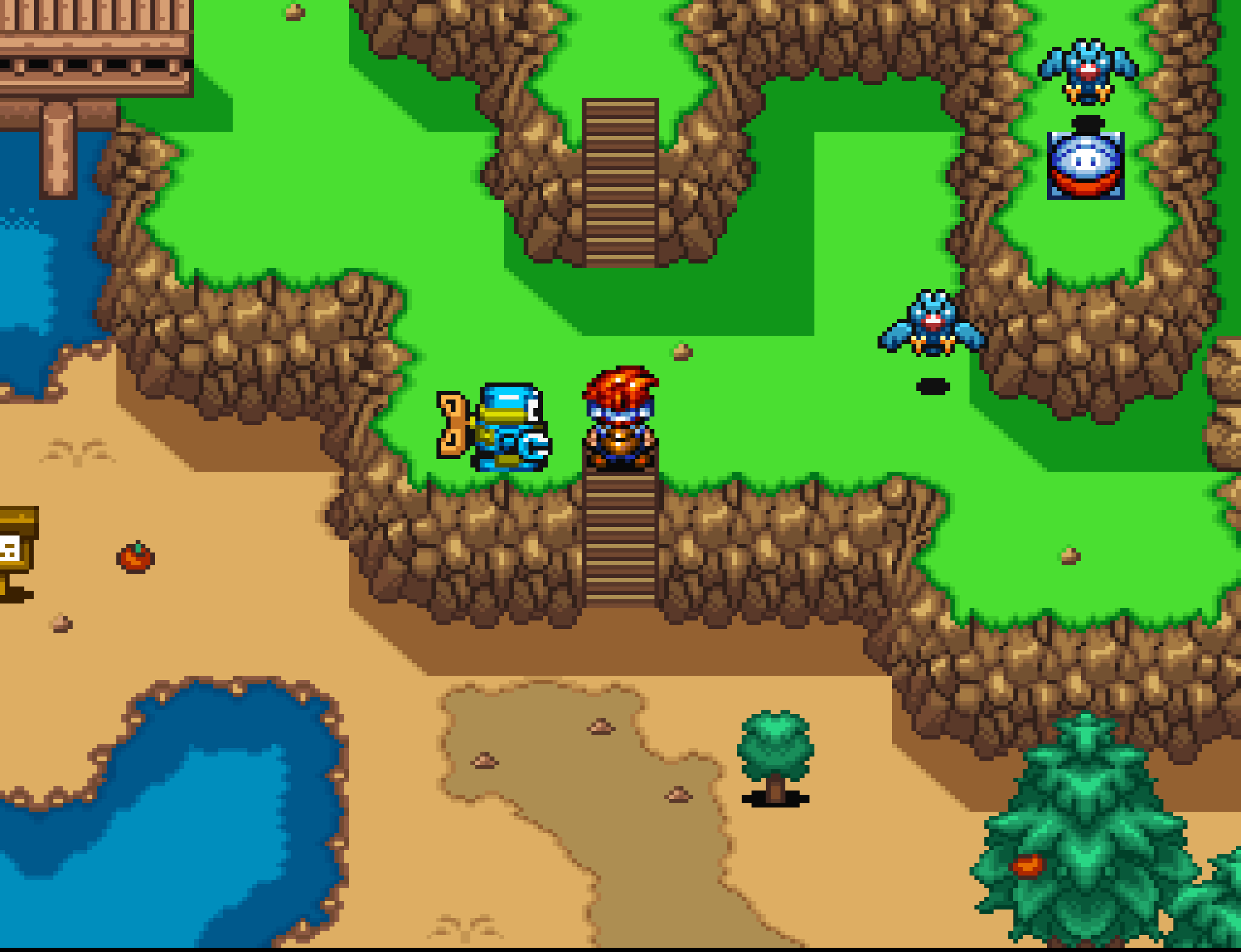
And the Pokémon thing, honestly? It’s a stretch if you’re strict about it. There’s no catching, no 150 to collect, no type chart. But the shape is there and it’s there first — a hero who doesn’t fight, who sends constructed units in and swaps them mid-battle by lobbing out what Hardcore Gaming 101 flatly calls a Pokéball, eighteen months before the actual Pokéball. Nintendo got there with catching. Quintet got there with a soldering iron.
One more reason to care, quietly. The audio was done by Ancient, which is Yuzo Koshiro’s studio — the Streets of Rage and ActRaiser guy — with Koshiro as sound producer and Ayako Yoda composing. A game this overlooked has no business having that in the credits.
How to play it in 2026
- The original US cartridge. Around US$40 loose on PriceCharting, up near US$150 complete-in-box, and sealed copies well past US$300 — steep for a game nobody remembers, but a tiny print run does that. Remember there’s no PAL cart, so you’re importing NTSC either way — a US console or an adapter.
- Emulation. The US release shipped with a full English script, so no fan patch needed. Any SNES emulator runs it. Sourcing the ROM is your business.
- Officially, on anything modern? Nothing. No Virtual Console, no Switch Online, no collection — it has never been re-released, anywhere. Square Enix has owned Quintet’s catalogue for years and left most of it sitting there, Robotrek included.
- The fan scene. There’s a rebalance hack called Robotrek Recombined on Romhacking.net if you want the game tuned up — a harder, tidied-up version.
It’s a strange little thing to have lost. Not a masterpiece, I don’t think it’s pretending to be one. But it had an idea about who does the fighting that the biggest series on earth would build a franchise on, and it had that idea early, and then it sold twenty thousand copies and quietly disappeared. Somebody should port it. I’d build a robot again.
Further reading
- Robotrek — Hardcore Gaming 101, the proper deep dive
- Robotrek (1994) — Nintendo Life game page, release and overview
- Robotrek — RPGFan, the contemporary English review (scored it 85%)
- Robotrek — The Cutting Room Floor, for the leftover European font tiles